












The Ultimate Guide to Startup Cost Control (Part 3)
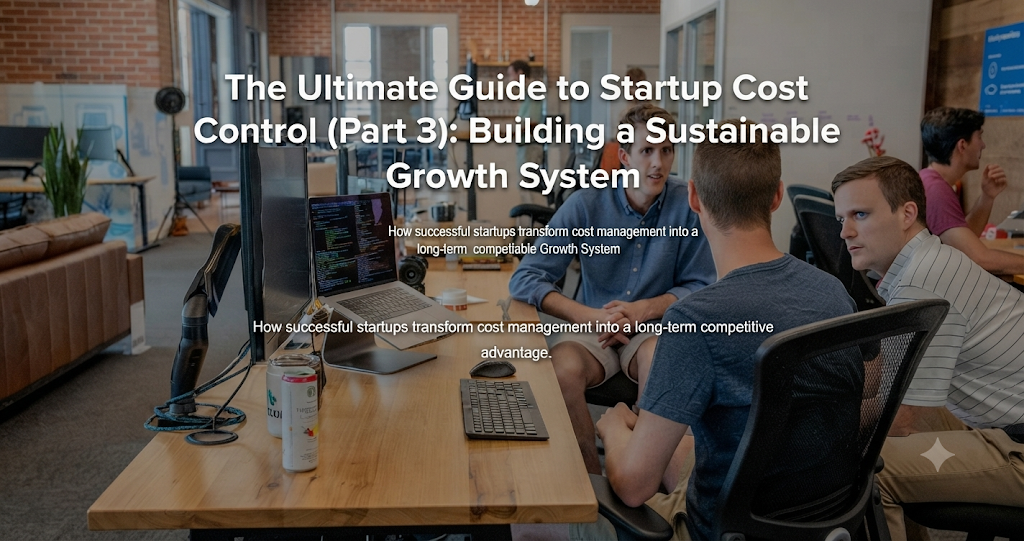
In the first two parts of our startup cost control series, we explored how entrepreneurs can identify unnecessary expenses, build smarter budgets, and improve operational efficiency.
However, controlling costs is not only about spending less. The strongest companies create a system where every dollar contributes to growth, customer value, and business stability.
In this final chapter, we will explore how startups can build a sustainable cost management system that supports long-term expansion.
Key Business Principle:
Cost control is not a limitation. It is a strategic tool that helps startups invest resources where they create the highest return.
Cost control is not a limitation. It is a strategic tool that helps startups invest resources where they create the highest return.

Building a sustainable startup requires strategic financial decisions.
1. Move From Expense Cutting to Strategic Cost Management
Many founders make the mistake of viewing cost control as simply reducing expenses.
While cutting unnecessary costs is important, sustainable businesses focus on understanding the relationship between spending and business outcomes.
Smart Cost Management vs Simple Cost Cutting
- Cost Cutting: Reducing expenses without considering long-term impact.
- Strategic Cost Management: Optimizing spending to improve efficiency, quality, and growth.
For example, reducing marketing spending may save money temporarily, but eliminating customer acquisition activities can slow business growth.
Instead, startups should analyze which investments generate measurable results and allocate resources accordingly.
2. Build a Data-Driven Startup Budget System
A successful startup budget should not be a fixed document created once a year.
It should be a dynamic management system that changes according to market conditions, customer demand, and business performance.
A Practical Startup Budget Framework
- Fixed Costs: Office, software subscriptions, salaries, and essential services.
- Variable Costs: Marketing campaigns, inventory, production, and customer support.
- Growth Investments: Technology, partnerships, branding, and market expansion.
By separating these categories, entrepreneurs can clearly understand where money is going and which areas deserve additional investment.
A strong startup budget answers one important question:
“Does this expense help the company grow, operate better, or serve customers more effectively?”
“Does this expense help the company grow, operate better, or serve customers more effectively?”
3. Optimize Supplier and Operational Costs
For product-based startups, supplier management is one of the biggest opportunities for cost improvement.
A reliable supply chain can reduce production costs, improve delivery speed, and protect profit margins.
4. Supply Chain Optimization: Turning Suppliers Into Growth Partners
For many startups, supply chain decisions determine whether the business can scale efficiently or struggle with rising operational costs.
A strong supply chain is not only about finding the lowest price supplier. It is about creating a reliable system that balances cost, quality, speed, and flexibility.
Key Strategies for Supply Chain Cost Optimization
-
1. Compare Multiple Supplier Options
Startups should avoid depending on a single supplier. Comparing different manufacturing partners helps businesses understand market pricing and negotiate better terms. -
2. Increase Purchasing Efficiency
Bulk purchasing, production planning, and inventory forecasting can reduce unnecessary costs while preventing overstock problems. -
3. Improve Supplier Communication
Clear communication about product specifications, delivery schedules, and quality expectations reduces mistakes and unnecessary expenses. -
4. Build Flexible Supply Networks
Successful startups create supplier relationships that allow them to adapt quickly when customer demand changes.

Efficient supply chains help startups reduce costs and improve scalability.
5. Build Long-Term Supplier Partnerships
The most successful companies understand that suppliers are not simply vendors. They are strategic partners who contribute to business growth.
Long-term supplier relationships can create advantages that short-term price negotiations cannot provide.
Benefits of Strategic Supplier Partnerships
- Better Pricing: Long-term cooperation often creates opportunities for improved purchasing terms.
- Higher Product Consistency: Reliable suppliers understand quality standards and production requirements.
- Faster Problem Solving: Strong relationships make communication easier when challenges appear.
- Innovation Opportunities: Experienced suppliers can provide suggestions for improving products and reducing costs.
For startups working with international suppliers, trust and communication become especially important.
A supplier who understands your business goals can become an important part of your growth strategy.
Business Growth Insight:
The lowest-cost supplier is not always the best choice. The best supplier is the one who helps your business create long-term value.
The lowest-cost supplier is not always the best choice. The best supplier is the one who helps your business create long-term value.
6. Use Automation to Reduce Operational Costs
As startups grow, manual processes become one of the biggest hidden expenses.
Tasks such as inventory tracking, customer communication, order processing, and reporting can consume valuable time and resources.
Automation allows small teams to operate like larger companies without increasing unnecessary labor costs.
Areas Where Startups Can Apply Automation
-
Inventory Management Automation
Real-time inventory systems help businesses avoid overstocking and reduce storage costs. -
Customer Service Automation
Chat systems and automated responses improve customer support efficiency. -
Marketing Automation
Email campaigns, customer segmentation, and advertising optimization help improve marketing ROI. -
Financial Tracking Automation
Automated reports provide better visibility into cash flow and business performance.

Automation allows startups to reduce repetitive work and focus on growth.
7. Creating a Startup Growth System
A sustainable startup does not rely on temporary cost reductions.
Instead, it builds a repeatable growth system where financial decisions, operations, and customer strategies work together.
The Startup Growth System Framework
-
Step 1: Financial Visibility
Track every major expense category and understand where resources create value. -
Step 2: Operational Efficiency
Improve workflows, remove unnecessary processes, and increase productivity. -
Step 3: Scalable Supply Chain
Create reliable supplier relationships that support future growth. -
Step 4: Customer-Focused Investment
Allocate resources toward activities that improve customer acquisition and retention. -
Step 5: Continuous Improvement
Regularly analyze performance data and adjust strategies.
8. Wawo Discount Business Perspective: Growing Through Smart Operations
At Wawo Discount, we believe sustainable business growth comes from combining efficient operations with customer-focused value creation.
Instead of focusing only on reducing expenses, successful businesses build systems that make every operation more efficient.
From supplier relationships and product sourcing to inventory management and customer experience, every decision contributes to long-term competitiveness.
Wawo Discount Growth Philosophy:
Smart businesses do not simply spend less. They build better systems that allow every investment to create greater value.
Smart businesses do not simply spend less. They build better systems that allow every investment to create greater value.
By applying strategic cost management principles, startups can improve profitability while creating a stronger foundation for future expansion.
9. Cash Flow Management: The Foundation of Startup Survival
Many startups fail not because their products are bad, but because they run out of cash before achieving sustainable growth.
Effective cash flow management allows businesses to maintain financial stability while continuing to invest in expansion opportunities.
Important Cash Flow Management Practices
-
Monitor Cash Inflows and Outflows
Track revenue, operational expenses, supplier payments, and upcoming financial obligations regularly. -
Maintain a Healthy Cash Reserve
A financial safety buffer helps startups handle unexpected challenges and market changes. -
Control Payment Timing
Optimizing supplier payments and customer collections improves working capital efficiency. -
Forecast Future Financial Needs
Forward-looking cash planning prevents sudden funding shortages.
Startup Financial Rule:
Revenue creates opportunities, but cash flow keeps the business alive.
Revenue creates opportunities, but cash flow keeps the business alive.
10. Build a Lean and Scalable Business Model
A lean business model allows startups to grow without increasing costs at the same speed as revenue.
The goal is not simply to become smaller. The goal is to create a flexible organization that can expand efficiently.
Characteristics of a Scalable Startup Model
- Simple Operations: Reduce unnecessary processes and focus on activities that create customer value.
- Technology Integration: Use digital tools to improve productivity and reduce repetitive work.
- Flexible Resources: Build partnerships and systems that allow the business to adapt quickly.
- Clear Performance Metrics: Measure important indicators such as customer acquisition cost, profit margin, and operational efficiency.

A scalable business model creates long-term growth opportunities.
11. Startup Cost Control Checklist
Use this checklist to review your startup cost management system:
- ✔ Have you identified your highest-value business expenses?
- ✔ Are your operational costs connected to measurable results?
- ✔ Do you regularly review supplier pricing and performance?
- ✔ Are repetitive tasks being automated?
- ✔ Do you have a clear monthly cash flow forecast?
- ✔ Are you investing more resources into profitable growth channels?
- ✔ Can your current business model support future expansion?
12. The Future of Startup Cost Control
The next generation of successful startups will not compete only through lower prices.
They will compete through smarter systems, stronger partnerships, better technology adoption, and efficient resource allocation.
Cost control has evolved from a financial activity into a complete business strategy.
Companies that understand this shift can build stronger foundations, respond faster to market changes, and achieve sustainable growth.
Final Business Lesson:
The purpose of cost control is not to limit growth. The purpose is to create the financial strength needed for bigger opportunities.
The purpose of cost control is not to limit growth. The purpose is to create the financial strength needed for bigger opportunities.
Conclusion: Building a Smarter Startup Future
Startup success requires more than a great idea.
Entrepreneurs must create efficient systems that protect resources, improve operations, and support long-term growth.
By combining strategic budgeting, supplier optimization, automation, and cash flow management, startups can transform cost control into a competitive advantage.
At Wawo Discount, we believe smarter operations create stronger businesses.
The companies that learn how to manage resources effectively today will be the leaders of tomorrow.
Ready to Build a More Efficient Business?
Explore smarter sourcing solutions, operational strategies, and business insights with Wawo Discount.
Visit Wawo Discount


