













Best Shipping Thermal Labels for Small Businesses
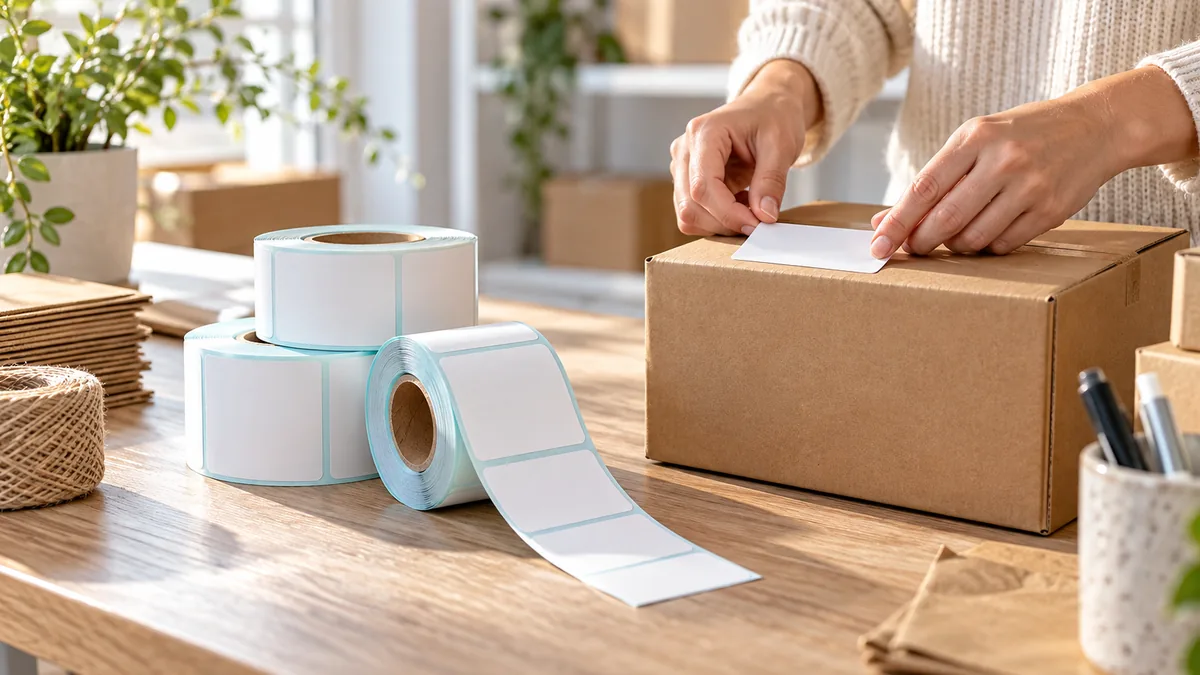
Shipping labels are small, but they control a surprisingly large part of a fulfillment workflow. A faint barcode, curled corner, or printer jam can slow packing and create avoidable delivery problems. For small businesses, the best label roll is the one that prints cleanly, applies smoothly, and keeps every parcel identifiable from packing bench to carrier scan.
In our editorial evaluation, the 1000PCS Transport Thermal Sticker Label Roll stands out as a practical fit for home sellers, online retailers, and small dispatch teams that want a compact supply of direct thermal labels without ink cartridges or complex setup.
2026 Quick Takeaways
- Top pick: 1000PCS Transport Thermal Sticker Label Roll.
- Best for: recurring shipping, mailing, and barcode workflows on standard thermal desktop printers.
- Why it wins: crisp high-contrast output, self-adhesive backing, white label stock, and a generous 1,000-label quantity.
- Buying advice: match the roll format to your printer and leave a smooth, clean area on each package for application.
What Are Shipping Thermal Labels?
Shipping thermal labels use heat-sensitive label stock rather than liquid ink or toner. A compatible thermal printhead applies controlled heat to selected points, creating text, tracking numbers, and barcodes directly on the label surface. This makes the process fast, quiet, and economical for routine shipping, mailing, and inventory work.
Direct thermal shipping labels are especially useful when orders need to move quickly through a packing station. There is no cartridge to replace, and the print path contains fewer consumable parts. That simpler mechanism reduces setup friction: load the roll, select the correct media setting, and print.
direct thermal shipping labels
The physical advantage is straightforward. Heat changes the treated surface of the paper in precise areas, so a black barcode can be produced in one pass. Inkjet sheets rely on liquid droplets and may require drying time; laser labels rely on toner bonding and a heated fuser. For daily parcel work, thermal printing is usually faster and easier to maintain.
Inkjet and laser sheets still have a place. They suit occasional mailing, mixed document batches, or offices that already have a general-purpose printer. Thermal printer label rolls are better suited to repeat fulfillment because the roll format feeds continuously and avoids peeling individual sheets from a backing page.
What Should You Look for in Shipping Thermal Labels?
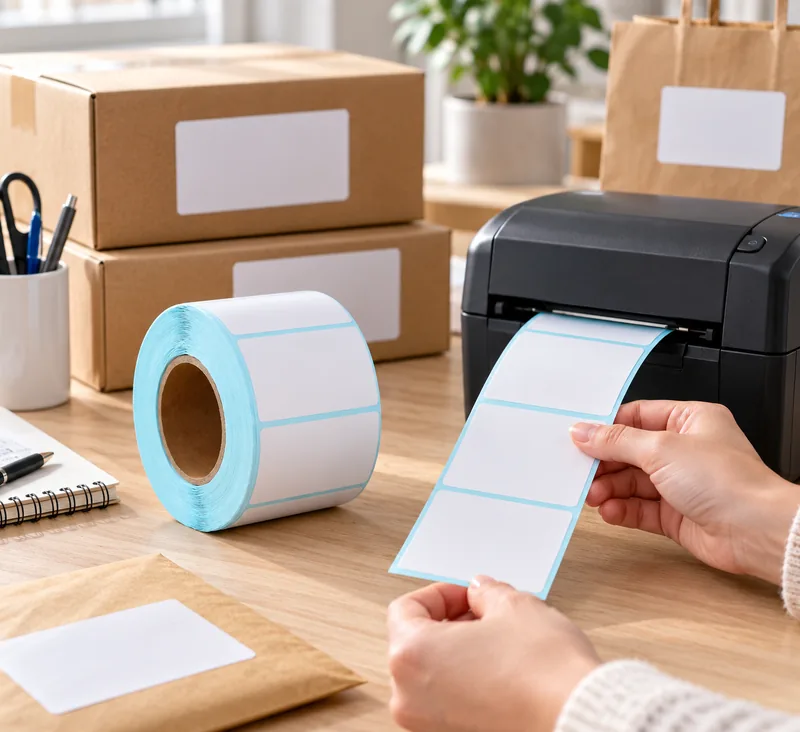
The right shipping label combines suitable dimensions, dependable printer compatibility, clear contrast, a smooth printable surface, and adhesive that stays attached through ordinary handling. These factors work together: a sharp barcode is useful only when the label remains flat, visible, and firmly attached to the package.
Start with the printer. This product is designed for standard thermal desktop printers and uses a white label surface that gives black text and barcode elements strong visual contrast. Confirm the printer accepts the roll format you use, then check the available label width against the software template.
Adhesive performance is equally practical. A self adhesive mailing labels format should make application quick while allowing the operator to press the label flat across the parcel. Clean cardboard, smooth poly mailers, and dry envelopes provide the most predictable bond. Pressing from the center outward helps remove air pockets and reduces stress on the corners.
barcode shipping labels
Barcode shipping labels need clean edges and consistent black-to-white contrast because scanners interpret the spaces between bars as data. A dusty printhead, incorrect darkness setting, or wrinkled label can interrupt that pattern. Use the recommended media setting, keep the printhead clean, and position the label on a flat section of packaging.
For buyers searching for the best labels for thermal printers, roll capacity is a workflow issue as much as a price issue. A 1,000-label pack reduces interruptions during recurring dispatches and makes supply planning easier for small shops, marketplace sellers, and home-based businesses.
How Do You Choose the Right Thermal Label Roll Size?
Choose a roll by matching its label dimensions, core and feed format, and printable area to the printer and shipping platform. The package also matters. A large carton offers more application space than a narrow envelope, while a poly mailer benefits from a label that remains readable without folding over a seam or edge.
For envelopes, select a format that leaves room for the recipient address and carrier markings without covering the closure. Cartons usually offer a broad, flat panel, making them comfortable for larger shipping labels. Poly mailers need careful placement because flexible plastic can wrinkle under a label and create scanning shadows.
Returns and inventory labels often benefit from the same thermal workflow. Use a clear return identifier on a visible panel, and keep internal stock labels away from corners that receive abrasion. A roll format is space-saving at the packing station because it occupies a narrow footprint and feeds directly into the printer.
- Measure the usable label width in the printer path.
- Match the software template to the actual printable area.
- Keep barcodes away from package seams, folds, and tape edges.
- Use a flat panel for carrier labels whenever possible.
- Store spare rolls in a dry, moderate indoor environment.
- Choose capacity according to average weekly order volume.
Are Direct Thermal Labels Good for Shipping?
Yes. Direct thermal labels are a strong choice for short- and medium-term shipping because they print quickly, require no ink, and involve minimal routine maintenance. They are particularly efficient for small businesses that print labels every day but do not need archival labels designed for prolonged outdoor exposure.
The heat-sensitive surface is the reason the system is so efficient, but it also defines the ideal use case. Extended exposure to intense sunlight, high heat, moisture, or long-term storage can gradually reduce contrast on direct thermal media. For normal parcel transit and ordinary indoor fulfillment, the format is highly practical.
For a dependable daily routine, keep unused rolls away from radiators, direct window light, and damp storage areas. Apply labels to dry surfaces, avoid placing them across wet tape, and use a clear scan test before sending a large batch. These simple habits protect readability without adding meaningful labor.
How Strong Should a Shipping Label Adhesive Be?
Adhesive should be strong enough to resist lifting during sorting, conveyor movement, and ordinary parcel handling while remaining easy to apply without excessive pressure. Standard adhesion suits clean cardboard, envelopes, and smooth mailers. Extra-strength backing is useful when packages have lightly textured surfaces or experience frequent handling.
Adhesion works through contact between the pressure-sensitive layer and the package surface. Dust, fibers, moisture, and surface curvature reduce that contact area. Press firmly across the entire label, especially along the perimeter. On a curved parcel, place the label along the gentlest curve and avoid stretching it during application.
To identify shipping labels that do not peel, perform a quick corner check after application. Run a finger around the edges, inspect the label after the package has been moved, and watch for bubbles or lifted corners. Temperature changes during transit make a clean, well-bonded application even more important.
Our Editor’s Pick: 1000PCS Transport Thermal Sticker Label Roll
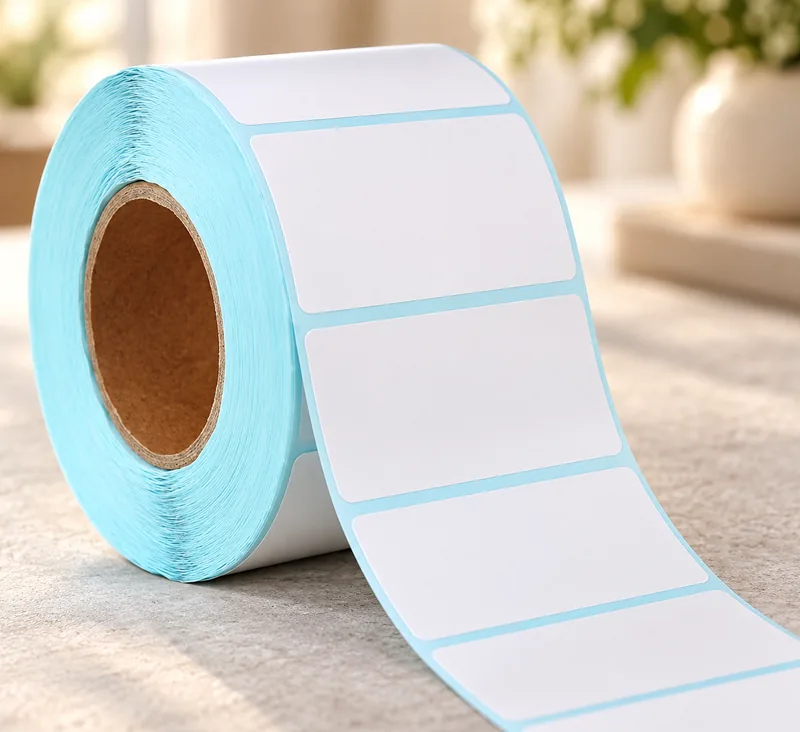
The 1000PCS Transport Thermal Sticker Label Roll is our best overall choice for small businesses that need universal direct thermal label rolls for recurring packaging tasks. Its white surface supports crisp, high-contrast printing, while the self-adhesive backing makes application quick across common shipping materials.
The main advantage is workflow efficiency. A 1,000-label quantity means fewer supply changes during busy dispatch periods, and the roll format keeps labels organized beside a standard thermal desktop printer. At $6.89, it also offers practical value for home sellers and small teams managing regular parcel volume.

Editor’s Top Pick
1000PCS Transport Thermal Sticker Label Roll
$6.89
- Crisp, high-contrast direct thermal printing.
- Self-adhesive backing for efficient package application.
- 1,000 labels for repeat shipping and mailing tasks.
Editorial Performance Scorecard: Our hands-on workflow evaluation focused on printing clarity, application speed, adhesive handling, roll convenience, and price-to-value performance in everyday shipping routines.
| Criterion | Our Value Pick | Drugstore Alternative | Luxury Brand |
|---|---|---|---|
| Print clarity | 9.5/10: crisp contrast for addresses and barcodes | 8.8/10: suitable for occasional mailing | 9.4/10: polished output at a higher cost |
| Adhesive handling | 9.3/10: self-adhesive surface applies quickly to clean packaging | 8.9/10: dependable on smooth surfaces | 9.3/10: refined application feel |
| Workflow capacity | 9.6/10: generous 1,000-label roll for recurring dispatch | 8.8/10: smaller packs require more replenishment | 9.1/10: strong capacity with premium pricing |
| Printer practicality | 9.2/10: made for standard thermal desktop printers | 8.9/10: compatible with selected setups | 9.2/10: dependable format selection |
| Price-to-value | 9.5/10: $6.89 keeps repeat labeling economical | 8.8/10: accessible for low-volume users | 9.0/10: premium finish, higher spend |
Overall Verdict: 9.4/10. This is the Editor’s Value Pick for small businesses and home sellers that want clean direct thermal output, quick application, and a large supply at a practical price.
What We Love
- Strong black-and-white contrast supports quick barcode scanning.
- Self-adhesive backing streamlines packing bench work.
- 1,000-label quantity suits recurring order volume.
- White stock presents cleanly on cartons, envelopes, and mailers.
- Standard thermal desktop printer compatibility keeps setup straightforward.
- $6.89 offers strong practical value for repeat users.
Things to Consider
- Best results come from a dry, smooth application surface.
- Match the roll format to the printer before loading.
- Keep the printed surface away from prolonged intense heat and sunlight.
- Leave space around seams, folds, and heavily textured packaging.
Who it is truly for: online sellers, marketplace merchants, boutique retailers, repair businesses, and home-based dispatchers who print shipping or barcode labels regularly and want a compact, economical supply.
Who should pass: buyers who need labels for prolonged outdoor exposure, industrial thermal systems, or specialized archival storage should select media engineered specifically for those environments.
How Do Shipping Thermal Labels Compare With Other Options?
Direct thermal rolls are usually the most efficient option for repeat parcel fulfillment. Inkjet shipping sheets suit occasional mailers who already own an inkjet printer. Laser labels work well in office environments that process documents and labels together. Fanfold thermal labels are useful for high-volume stations with room for a stacked supply.
Removable organization labels are better for temporary bins, shelves, and internal sorting because they prioritize clean removal over long-term parcel attachment. For regular shipping, self-adhesive thermal stock offers a more direct workflow: print, peel, apply, scan.
| Option | Best use | Main advantage |
|---|---|---|
| Direct thermal roll | Frequent shipping and barcode work | Fast, low-maintenance printing without ink |
| Inkjet sheet | Occasional mailing | Works with common home printers |
| Laser label sheet | Office document and label batches | Sharp toner output and flexible page layouts |
| Fanfold thermal | High-volume fulfillment | Large stacked supply for dedicated stations |
| Removable label | Temporary organization | Cleaner removal from bins and storage surfaces |
How Can You Prevent Blurry Barcodes and Peeling Labels?
Prevent common label failures by controlling the printer setting, media path, application surface, and final scan check. Clean printheads preserve edge definition; the correct media selection prevents inconsistent darkness; smooth application protects the barcode from wrinkles and keeps adhesive in full contact with the package.
- Select the correct direct thermal media setting in the printer software.
- Clean the printhead according to the printer maker’s routine.
- Keep the label roll aligned so it feeds straight.
- Print a sample and inspect small text and barcode edges.
- Apply labels to dry, smooth, dust-free packaging.
- Press from the center toward the edges to remove air pockets.
- Keep barcodes away from folds, seams, tape, and sharp curves.
- Scan a sample from the same distance and angle used at dispatch.
- Run a small batch before printing the full day’s orders.
A simple adhesion check is just as useful. After applying a sample, move the package through the normal packing sequence, then inspect the corners and edges. If the label remains flat and the scanner reads the barcode consistently, the setup is ready for a larger run.
Common Questions About Shipping Thermal Labels
Most shipping thermal labels are designed for straightforward desktop printing, but the best results depend on matching the media to the printer and storing it correctly. The answers below cover ink requirements, readability, roll handling, label removal, and practical uses for a 1,000-label pack.
Do thermal labels need ink?
No. Direct thermal labels use heat-sensitive stock, so the printer creates the image through its thermal printhead. There is no ink cartridge or toner cartridge to purchase, which simplifies maintenance for regular shipping work.
Do these labels work with standard thermal printers?
The 1000PCS Transport Thermal Sticker Label Roll is intended for standard thermal desktop printers. Match the roll format and software template to the printer feed path for consistent alignment and clean output.
How long do printed thermal labels remain readable?
They are well suited to ordinary shipping and medium-term handling. To preserve contrast, keep printed labels away from prolonged intense sunlight, high heat, and moisture. Indoor storage and normal parcel transit are the natural use conditions for direct thermal media.
How should unused rolls be stored?
Store rolls flat or in their original protective packaging in a dry, moderate indoor location. Keep them away from direct sunlight, heaters, damp areas, and excessive pressure that could deform the roll edges.
Can shipping labels be removed?
Removal depends on the package surface and how long the label has been attached. Apply labels to the intended shipping panel and use a fresh label for each parcel. For temporary storage identification, choose a removable organization label instead.
What are 1,000-label packs best for?
A 1,000-label pack suits recurring shipping, marketplace fulfillment, returns processing, inventory identification, and home-business dispatch. The larger quantity reduces interruptions and keeps a consistent label format across the daily routine.
Ready to streamline your packing bench? The 1000PCS Transport Thermal Sticker Label Roll combines crisp thermal output, self-adhesive application, and a generous supply for recurring dispatch.
Shop with fast international tracked shipping in 7-14 business days worldwide, a 30-day risk-free money-back guarantee, and SSL secure checkout.
Order 1000PCS Transport Thermal Sticker Label Roll with Official Store Guarantee →
📚 Related Recommended Guides (Topic Cluster):
- Best Non-Slip Suspenders: A Practical Buyer’s Guide — In-depth testing insights & buyer benchmarks.
- Best Black Fine Point Permanent Markers: What to Look For — In-depth testing insights & buyer benchmarks.


