













Best Poly Mailers for Clothes: A Small-Seller Buying Guide
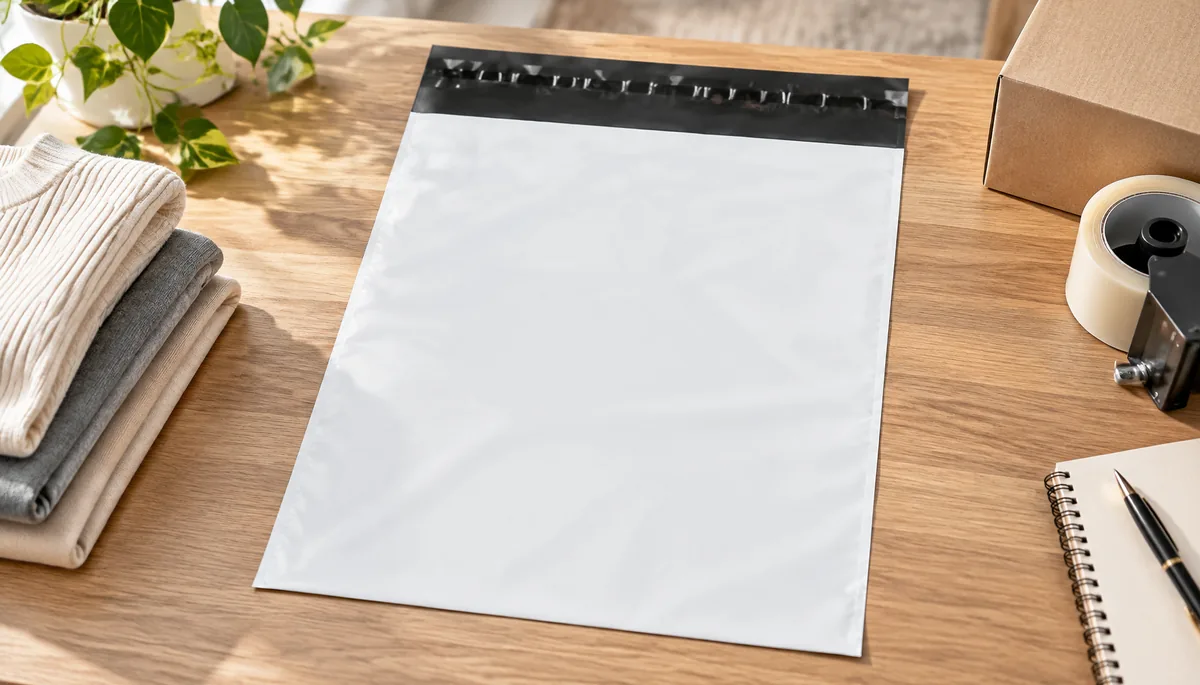
Best Poly Mailers for Clothes: A Small-Seller Buying Guide
A shirt does not always need a box. For a small clothing order, a correctly fitted mailer can be the more practical starting point; bulky bundles and garments that need shape protection call for a different approach. FedEx recommends considering poly mailers for one or two small clothing items. ([fedex.com](https://www.fedex.com/en-us/shipping/how-to-ship-clothes.html?utm_source=openai))
Our featured recommendation for occasional sellers is the 12PCS Self Adhesive Clothing Packaging Bags. We favor its starter quantity for a first batch of sales, rather than assuming every seller needs a warehouse-sized supply. Publisher disclosure: Wawodiscount publishes this guide and sells the featured product.
Which poly mailers should you buy for shipping clothes?
Choose poly mailers for clothes by the folded garment’s width, length, and thickness, then match protection and pack quantity to your orders. Our recommendation is to start small for occasional sales and move to bulk after your size mix stabilizes. Use a box when the shipment needs cushioning, structure, or room for a bulky bundle. ([fedex.com](https://www.fedex.com/en-us/shipping/how-to-ship-clothes.html?utm_source=openai))
| Garment Profile | Frequency | Closure | Protection | Pack Choice |
|---|---|---|---|---|
| One measured, softly folded shirt | A few sales | Permanent peel-and-seal | Unpadded outer mailer | Consider a 12-pack |
| Jeans or a hoodie with substantial thickness | Occasional | Full, flat seal | Room around seams and garment hardware | Starter quantity in the fitted size |
| Several garments in a bulky stack | Variable | Mailer or taped box closure | Compare a larger mailer with a box | Buy for the actual order mix |
| Structured clothing or delicate embellishments | Any | Secure outer closure | Rigid box and appropriate cushioning | Protection takes priority |
| Repeat orders with stable dimensions | Several daily | Standardized packing workflow | Packaging matched to the garment | Compare bulk delivered cost |
| Orders with planned customer returns | Any | Dedicated second sealing strip | Return-ready packaging | Choose a purpose-built return design |
Treat this table as a buying framework, not a universal fit promise. FedEx advises boxes for large clothing bundles exceeding 5 inches / 12.7 cm in height; its clothing guide also recommends stronger protection for formal attire. ([fedex.com](https://www.fedex.com/en-us/shipping/how-to-ship-clothes.html?utm_source=openai))
Our #1 small-pack pick: Wawodiscount’s 12-piece mailers
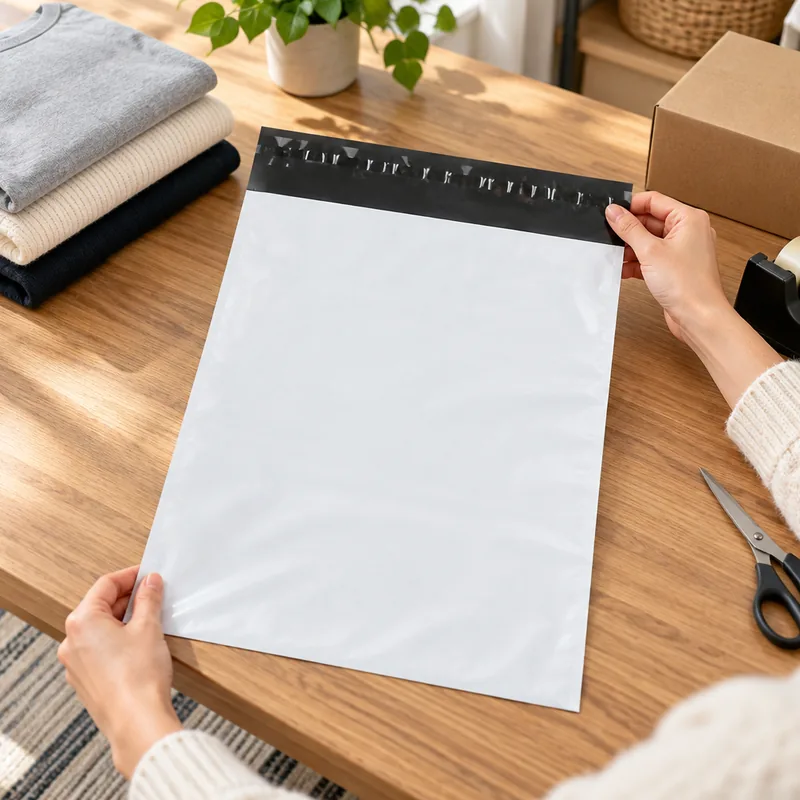
Our store editor’s small-pack choice is the 12-piece set for occasional clothing shipments. It combines Heavy-Duty Coextruded Polyethylene with an opaque construction and permanent peel-and-seal closure. The recommendation centers on starter quantity and straightforward packing, rather than a claim of independently established superiority over competing mailers. ([wawodiscount.com](https://www.wawodiscount.com/shop/12pcs-self-sealing-transportation-bags-unlined-mailing-bags-self-sealing-clothing-transportation-bags-packaging-bags-suitable-for-both-business-and-personal-use/))
Why this construction fits the job: an unpadded, flexible envelope accommodates soft goods without providing the rigid structure of a carton. That distinction matters more than premium-sounding packaging language: select the outer package around the garment’s protection needs. FedEx makes the same practical distinction between small clothing shipments and bulky or delicate orders. ([fedex.com](https://www.fedex.com/en-us/shipping/how-to-ship-clothes.html?utm_source=openai))
What We Love
Who it is for: closet clear-outs, first marketplace orders, and sellers who prefer a space-saving starter supply.
Our buying priority is practical value: enough packaging to begin without committing shelf space to a large case.
Things to Consider
Who should pass: sellers needing rigid garment protection, substantial cushioning, a dedicated return closure, or high-volume replenishment.
Choose packaging for those jobs directly rather than asking an unpadded outbound mailer to do everything.

Editor’s Small-Pack Pick
12PCS Self Adhesive Clothing Packaging Bags
From $5.31 USD; listed variants range to $5.97 USD. ([wawodiscount.com](https://www.wawodiscount.com/shop/12pcs-self-sealing-transportation-bags-unlined-mailing-bags-self-sealing-clothing-transportation-bags-packaging-bags-suitable-for-both-business-and-personal-use/))
- 12-piece starter quantity.
- Peel, press, and seal.
- Accepts shipping labels and markers.
What size poly mailer do you need for shirts and hoodies?
Measure the folded garment before choosing a mailer, including its thickest point. A shirt and hoodie with similar folded footprints can require different envelopes because thickness consumes usable space. Use common mailer sizes as starting points, then leave enough clearance for an unstretched opening and a flat, uninterrupted adhesive seal. ([jiaropack.com](https://jiaropack.com/blogs/jiaropack-blog/what-size-poly-mailer-for-clothes))
poly mailer sizes for shirts and hoodies
Use this chart to shortlist poly mailer sizes for shirts and hoodies, not to assign a guaranteed fit. The folded examples and starting sizes follow JiaroPack’s guidance; your fabric, garment size, and folding method determine the final choice. ([jiaropack.com](https://jiaropack.com/blogs/jiaropack-blog/what-size-poly-mailer-for-clothes))
| Garment | Folded Example | Starting Mailer | Fit Priority |
|---|---|---|---|
| T-shirt or polo | 9 × 11 in / 22.9 × 27.9 cm | 10 × 13 in / 25.4 × 33 cm | Room for the folded edges and flap |
| Jeans | 10 × 12 in / 25.4 × 30.5 cm; 2–3 in / 5.1–7.6 cm thick | 12 × 15.5 in / 30.5 × 39.4 cm | Allow for waistband bulk |
| Thick hoodie | 12 × 15 in / 30.5 × 38.1 cm; at least 3 in / 7.6 cm thick | 14.5 × 19 in / 36.8 × 48.3 cm | Accommodate the hood and fleece |
| Two or three T-shirts | 9 × 11 in / 22.9 × 27.9 cm; 2–3 in / 5.1–7.6 cm thick | 12 × 15.5 in / 30.5 × 39.4 cm | Measure the complete stack |
For additional folding and clearance guidance, read the supporting clothing-mailer size guide. Keep these general examples separate from the store’s selector labels: numerical similarity alone does not establish measurement units or usable interior space. ([jiaropack.com](https://jiaropack.com/blogs/jiaropack-blog/what-size-poly-mailer-for-clothes))
Our practical fit routine: fold the actual order, measure all three dimensions, and place it in a sample envelope without stretching the film. Let the opening relax before folding the flap. Move up a size if the contents pull the sealing area out of shape. FedEx likewise cautions against packaging that is too small and stresses seams. ([fedex.com](https://www.fedex.com/en-us/shipping/how-to-ship-clothes.html?utm_source=openai))
What should you look for in self-sealing clothing mailers?
Look for a closure suited to the shipping journey, enough seam clearance, suitable film thickness, and a surface that holds your label. Assess build quality with the garment inside, not just with an empty bag. Our recommended workflow separates everyday packing convenience from measurable protection, using repeatable checks before assigning performance ratings.
self sealing shipping bags for clothes
When comparing self sealing shipping bags for clothes, distinguish a permanent outbound closure from a dedicated return strip. The featured product uses permanent adhesive. For two-way shipping, look for an explicitly return-ready design; Sealed Air, for example, describes return-ready paper options with a separate return sealing strip. ([wawodiscount.com](https://www.wawodiscount.com/shop/12pcs-self-sealing-transportation-bags-unlined-mailing-bags-self-sealing-clothing-transportation-bags-packaging-bags-suitable-for-both-business-and-personal-use/))
- Seal adhesion: aim for continuous contact across the closure, with fabric clear of the adhesive.
- Seam integrity: inspect the filled bag for stretching and concentrated pressure.
- Puncture resistance: position zippers, buckles, and buttons away from vulnerable contact points.
- Opacity: assess whether garment colors and identifying details remain concealed.
- Label adhesion: apply your actual label stock to a smooth section of the packed envelope.
- Film thickness: compare declared gauges alongside garment weight and shape. One mil equals 0.001 in / 0.0254 mm.
A repeatable seal-testing guide
Here is our proposed real-world testing protocol for a future hands-on evaluation. Use identical garment loads, label stock, and conditioning time for every candidate. Record the results before setting a durability benchmark or publishing a numerical performance score. These are proposed procedures, not reported product results.
| Dimension | Repeatable Procedure | Record |
|---|---|---|
| Packing efficiency | Time six identical orders from garment insertion to label application | Median seconds per order and packing errors |
| Closure security | Use the same pressing method and rest period, then apply a controlled pull with a force gauge | Opening force and failure location |
| Seam strength | Pull equivalent seam samples with the same gauge and loading procedure | Peak force and seam separation |
| Splash protection | Expose sealed samples containing dry absorbent paper to the same measured spray volume, distance, and duration | Interior wetting and entry location |
| Label retention | Apply identical labels, allow equal adhesion time, then repeat controlled handling and rubbing | Lifted edges and barcode readability |
For a more ergonomic packing station, our recommendation is to place garments, envelopes, labels, and the scale within easy reach and process orders in the same sequence. Build that sequence into your daily routine. Keep timing results separate from protection results: a fast seal and a strong seam answer different questions.
Are poly mailers better than boxes or padded mailers?
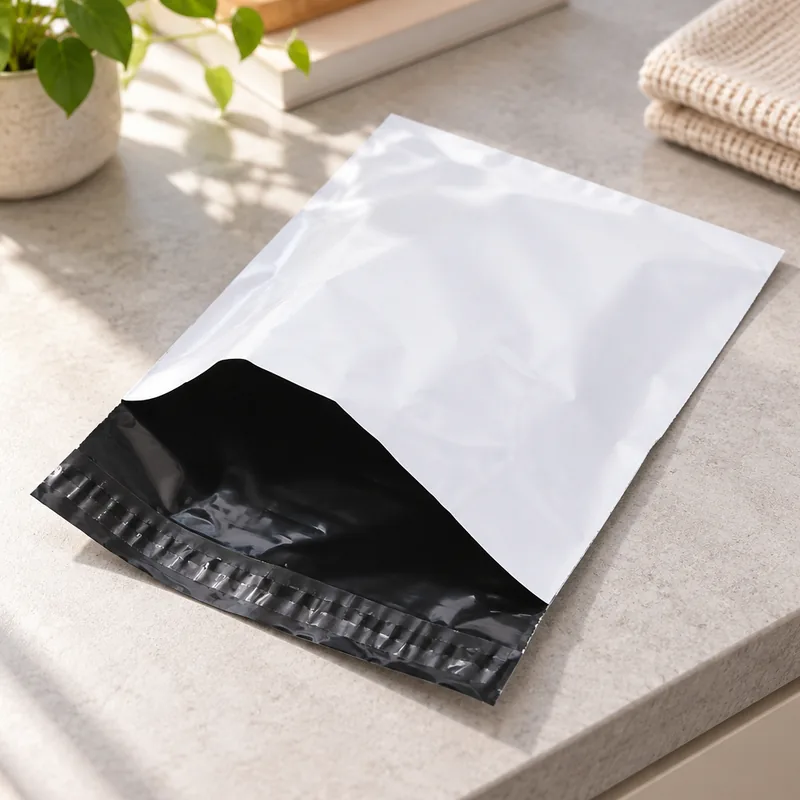
Poly mailers are a sensible starting point for soft clothing that needs containment rather than cushioning or rigid support. Padded mailers add cushioning, while boxes provide structure and space for protective materials. Choose protection first, then compare packed weight, storage requirements, and carrier quotes; no packaging format wins for every garment. ([sealedair.com](https://www.sealedair.com/content/dam/protective-materials/mailers/poly-mailers/Protective_PolyMailers_SellSheet_NA22.pdf))
The useful question in poly mailers vs boxes for clothing is whether the item can tolerate compression and ordinary handling without rigid support. A folded tee and an embellished occasion dress have different needs. FedEx recommends protective boxing for wedding dresses and other delicate garments. ([fedex.com](https://www.fedex.com/en-us/shipping/how-to-ship-clothes.html?utm_source=openai))
| Criterion | Our Value Pick | Padded Mailer | Box |
|---|---|---|---|
| Best application | Occasional soft-clothing orders | Orders needing light cushioning | Structured garments or bulky bundles |
| Protection mechanism | Flexible, unpadded enclosure | Envelope plus cushioning layer | Rigid enclosure with chosen internal protection |
| Packed weight | Minimal packaging structure; weigh the finished order | Includes cushioning material | Includes carton, tape, and any protective fill |
| Storage footprint | Small starter supply stored flat | Padding adds stored thickness | Flattened cartons need assembly space |
| Packing steps | Insert, seal, label | Insert, seal, label | Assemble, load, protect, tape, label |
| Buying priority | Low initial quantity | Cushioning requirement | Structure and protection |
Sealed Air describes the flat storage and reduced assembly steps of mailers compared with cartons, while distinguishing cushioned from non-cushioned versions. Those are useful format-level differences, not evidence that one particular bag outperforms every alternative. ([sealedair.com](https://www.sealedair.com/content/dam/protective-materials/mailers/poly-mailers/Protective_PolyMailers_SellSheet_NA22.pdf))
Compare postage using the finished parcel
Pack the same garment in each suitable format. Weigh each completed parcel and measure its maximum length, width, and height, including any bulge. Then request quotes for the same origin, destination, service, and shipment date. UPS explains that dimensional weight can affect charges when a parcel is large relative to its actual weight. ([ups.com](https://www.ups.com/us/en/support/shipping-support/shipping-dimensions-weight?WT.mc_id=VAN701060%3Eimweight&utm_source=openai))
Use the carrier’s current measurement and rounding instructions instead of the envelope’s flat catalog dimensions. For European or cross-border shipments, repeat the comparison with the actual service available for that route. Accurate finished measurements are the basis of a useful quote comparison. ([ups.com](https://www.ups.com/us/en/support/shipping-support/shipping-dimensions-weight?WT.mc_id=VAN701060%3Eimweight&utm_source=openai))
Keep this packaging comparison handy when your order mix changes. If an unpadded envelope fits the job, return to the featured product selector rather than paying for cushioning you do not need.
Should you buy a 12-pack or bulk mailers for holiday orders?
Buy a starter pack when demand is occasional or your garment-size mix is still changing. Consider bulk when repeat orders justify the total cash outlay and storage commitment. Our recommended comparison uses delivered cost per usable bag, expected shipments, and leftover inventory, rather than the lowest advertised unit price alone.
Small pack poly mailers are worth considering when you need enough stock for the next selling period without dedicating a shelf to surplus packaging. For a larger operation, compare purchasing plans over the same forecast horizon and count only bags that suit the garments you actually ship.
| Worksheet Line | Starter Plan | Bulk Plan |
|---|---|---|
| Delivered purchase cost | Pack subtotal + shipping + applicable taxes or duties | Case subtotal + shipping + applicable taxes or duties |
| Usable bags | Purchased bags that fit your orders, less test samples and rejects | Purchased bags that fit your orders, less test samples and rejects |
| Cost per usable bag | Delivered cost ÷ usable bags | Delivered cost ÷ usable bags |
| Expected shipments | Your forecast for the chosen period | The same forecast period |
| Unused inventory | Maximum of usable bags minus shipments, or zero | Maximum of usable bags minus shipments, or zero |
| Cash cost per forecast shipment | Total purchasing outlay needed ÷ forecast shipments | Total purchasing outlay needed ÷ forecast shipments |
| Storage commitment | Measure the allocated drawer or shelf | Measure the allocated case storage |
Break-even method: if you need N shipments, compare the delivered cost of enough starter packs to cover N with the delivered cost of enough bulk packs to cover N. Include replenishment shipping on each purchase. Keep leftover stock visible rather than assuming every purchased bag will be used immediately.
Black Friday shipping supplies 2026
Plan Black Friday shipping supplies 2026 around orders ready to dispatch, not just sale-day advertising. Black Friday falls on November 27, 2026, followed by Cyber Monday on November 30, 2026. These calendar dates are planning anchors, not store discount announcements or delivery promises. ([timeanddate.com](https://www.timeanddate.com/holidays/us/black-friday))
- Record the actual offer: save the selected variant, quantity, displayed price, and delivered total.
- Compare like with like: use equivalent sizes, closure types, and packaging formats.
- Plan arrival before packing day: account for order processing as well as transit.
- Forecast by garment: separate shirts, hoodies, denim, and bundles.
- Set a replenishment trigger: multiply expected daily shipments by replenishment lead time, then add your chosen buffer.
- Prepare the complete station: count labels, printer supplies, tape, and boxes alongside mailers.
For orders covered by Wawodiscount’s contiguous-U.S. shipping policy, the published estimate is 3–7 business days in total, including handling. Use the applicable destination terms when planning other routes; the U.S. estimate is not a worldwide delivery window. ([wawodiscount.com](https://www.wawodiscount.com/shipping-policy/))
Common questions about shipping clothes in poly mailers
The key decisions are garment fit, protection, closure type, and purchasing quantity. Keep material claims separate from complete-package performance, and treat permanent seals differently from return closures. Use the answers below alongside the size guide, packaging comparison, proposed testing protocol, and holiday checklist to build a consistent packing process.
Do waterproof claims cover the entire sealed package?
Wawodiscount describes the featured mailers as waterproof and tear-resistant. Those are seller claims, not a reported result from the proposed splash test. When comparing waterproof mailing bags for clothing, evaluate the complete sealed package, including seams and closure, rather than the film alone. ([wawodiscount.com](https://www.wawodiscount.com/shop/12pcs-self-sealing-transportation-bags-unlined-mailing-bags-self-sealing-clothing-transportation-bags-packaging-bags-suitable-for-both-business-and-personal-use/))
How do I avoid overfilling a clothing mailer?
Measure the complete folded order, including thickness, and leave room for the opening and closure to lie flat. Size up when the contents stretch the seams or distort the flap. For large bundles exceeding 5 inches / 12.7 cm in height, FedEx recommends a corrugated box. ([fedex.com](https://www.fedex.com/en-us/shipping/how-to-ship-clothes.html?utm_source=openai))
When should I use an inner garment bag?
An inner garment bag can add a separate layer against dirt and moisture and keep a folded item together. FedEx recommends considering a plastic bag or polybag for clothing protection. Include that layer when measuring the order so the outer package still fits comfortably. ([fedex.com](https://www.fedex.com/en-us/shipping/how-to-ship-clothes.html?utm_source=openai))
Can the featured mailers be resealed for returns?
The listed permanent adhesive is an outbound closure, not a reusable return seal. Choose a purpose-built design with a separate return strip when easy two-way shipping is part of your service. Sealed Air describes that second-strip approach in its return-ready paper mailer range. ([wawodiscount.com](https://www.wawodiscount.com/shop/12pcs-self-sealing-transportation-bags-unlined-mailing-bags-self-sealing-clothing-transportation-bags-packaging-bags-suitable-for-both-business-and-personal-use/))
Final buying prompt: measure your next order, match the selected size to its folded dimensions and sealing clearance, and choose a starter quantity if demand is occasional. Revisit the size guide, packaging comparison, seal-testing guide, and holiday checklist, then select your 12-piece pack.
📚 Related Recommended Guides (Topic Cluster):
- Best Phone Screen Magnifiers With Speakers: Buying Guide — In-depth testing insights & buyer benchmarks.
- Best Skirted Jig Lures for Bass and Catfish — In-depth testing insights & buyer benchmarks.


