













Best Tagging Gun for Delicate Fabrics: A Fine-Stitch Guide
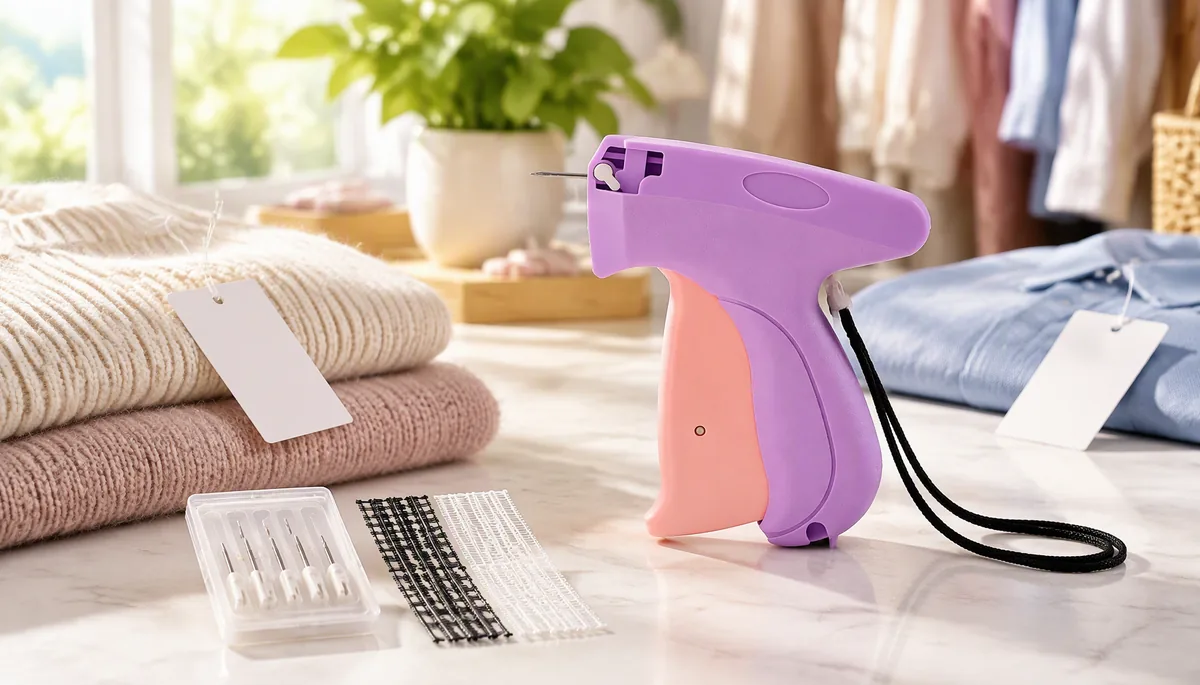
A price tag should help sell a garment, not leave a noticeable hole in it. For boutiques handling silk, fine knits, and lightweight occasionwear, the right tagging method starts with the fabric—not the gun.
Quick takeaways for 2026: A fine-stitch tool is the practical choice when a garment can safely be pierced at a sturdy label or seam allowance. Our editor’s pick is the compact 1PCS Miniature manual label micro needle gun. For fragile finishes or open weaves, choose a needle-free hang tag instead.
If a compact manual tool suits your boutique’s daily routine, the 1PCS Miniature manual label micro needle gun offers a fine-stitch alternative to a bulky standard pricing gun. The important next step is deciding which garments should be pierced at all.
What kind of tagging gun is best for delicate fabrics?
A fine-stitch, micro-needle tagging gun is usually the better choice for delicate clothing that has a suitable care label or sturdy seam allowance. Its slimmer needle is intended to leave a less conspicuous puncture than a standard gun. No needle-based method is damage-free on every fabric, so placement matters as much as tool size.
A fine stitch tagging gun for clothing makes the most practical sense when your boutique handles both presentation-sensitive garments and enough inventory to benefit from quick, repeatable tagging. Reserve a standard gun for sturdier materials where a larger needle and fastener are appropriate. On sheer, loosely woven, or easily snagged fabric, pause before piercing.
What should you look for in a fine-stitch tagging gun?
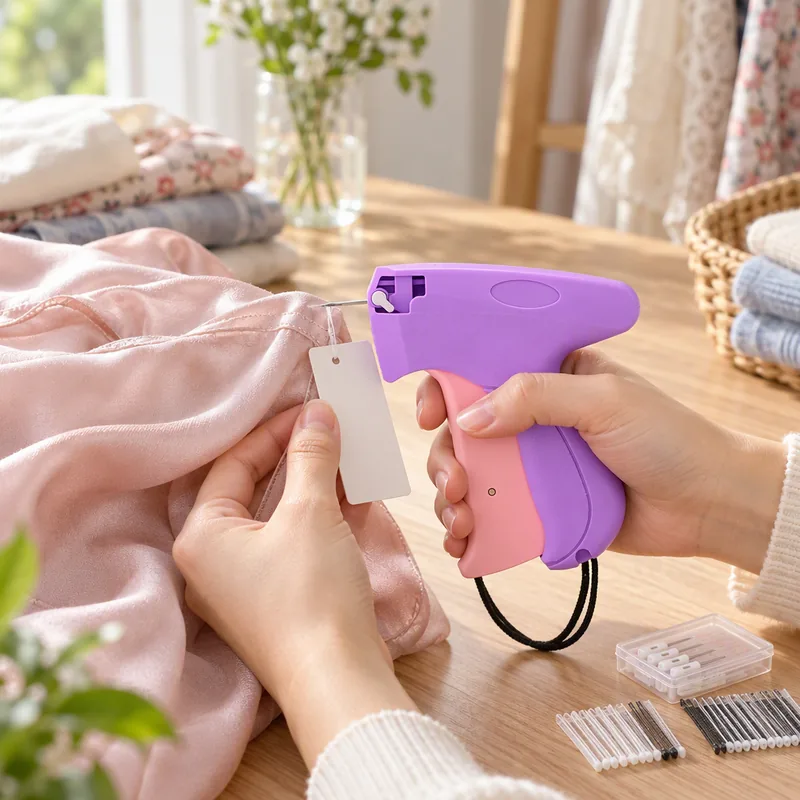
Prioritize a slim needle, fine-gauge fastener compatibility, a comfortable trigger, dependable build quality, and access to the correct replacement needles. The best setup is a matched system: gun, needle, and fasteners must work together. For a busy boutique, an easy squeeze and consistent fastener release can make repeated tagging feel more manageable.
Fine stitch tagging gun needle compatibility is a system question, not just a needle-size question. Match replacement needles to the gun model and use the fine-gauge barbs or fasteners designed for it. Compare the gun’s product details and accessory listings when assembling a complete tagging setup.
- Needle: Choose a fine-stitch profile for suitable delicate garments.
- Fasteners: Pair the tool with compatible fine-gauge barbs or fasteners.
- Grip: Look for an ergonomic trigger that feels manageable during repeated squeezes.
- Upkeep: Keep correctly matched replacement needles available for a smooth tagging routine.
Micro-needle vs standard tagging gun: which should you buy?
For a boutique selling delicate clothing, choose a micro-needle system when garments have a safe place to receive a fine-gauge fastener. A standard gun is better suited to sturdier clothing and conventional fasteners. Neither should be the default for fragile finishes: a loop fastener, sewn-in label, or unattached hang tag may be safer.
micro needle tagging gun vs standard
The useful micro needle tagging gun vs standard comparison comes down to fabric sensitivity and workflow. A micro-needle format favors discreet tagging on appropriate attachment points; a standard gun favors robust garments and conventional tagging supplies. For leather, open-weave knits, and highly delicate surfaces, skip the needle and attach information to an existing loop or label instead.
| Criterion | Our Value Pick | Drugstore Alternative | Luxury Brand |
|---|---|---|---|
| Format | Compact, manual fine-stitch tool | Typically a standard-size tagging gun | Specialty fine-stitch options vary |
| Fabric approach | Ultra-slim needle design for suitable attachment points | Best reserved for sturdier garments | Choose by needle and fabric requirements |
| Fasteners | Compatible with fine-gauge barbs and fasteners | Uses its matching standard-gauge supplies | Uses model-matched supplies |
| Practical value | Ergonomic squeeze trigger and compact format at $9.90 | A straightforward option for robust stock | A higher-cost route for specialized workflows |

EDITOR’S TOP PICK
1PCS Miniature manual label micro needle gun
$9.90
- Fine-stitch positioning for suitable delicate garments
- Compact, space-saving manual format
- Ergonomic squeeze trigger; fine-gauge fastener compatibility
Why is the 1PCS Miniature Manual Label Micro Needle Gun our #1 editor’s recommendation?
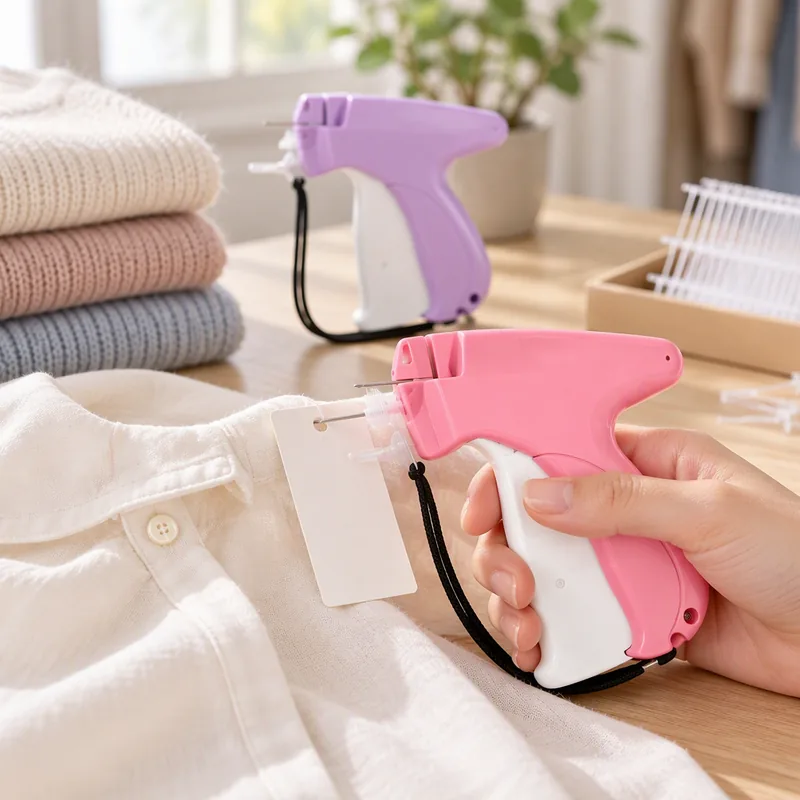
This $9.90 pick brings together the features that matter most for an accessible fine-stitch setup: an ultra-slim needle design, compatibility with fine-gauge barbs and fasteners, and an ergonomic manual squeeze trigger. Its miniature format is also easier to fit into a crowded tagging station than a conventional full-size pricing gun.
For shoppers asking about the best tagging gun for boutique clothing, that combination offers practical value without making an unrealistic promise about every textile. The light pink and lilac color options add an easy-to-spot touch to a busy stockroom. See the product page for current specifications, included accessories, and compatibility.
Five-point hands-on evaluation checklist
When assessing a tagging gun in real-world testing, use the same garment samples and fasteners for each tool. These five checks reveal more than a quick squeeze in the air:
- Grip comfort: Does the trigger remain comfortable through a typical tagging batch?
- Tagging consistency: Do compatible fine-gauge fasteners release cleanly and predictably?
- Fabric marks: How visible is the puncture at a safe, inconspicuous attachment point?
- Build quality: Does the trigger action remain smooth over the daily routine?
- Durability benchmark: Do needle seating and fastener feeding remain consistent over repeated use?
👍 What We Love (Pros)
Compact storage, a comfortable manual squeeze format, fine-stitch positioning, and a $9.90 entry price make this a sensible addition to a boutique tagging station.
⚠️ Things to Consider (Cons)
Use fine-gauge supplies matched to the gun. For garments with no suitable piercing point, a needle-free tag is the more careful presentation choice.
How do you tag delicate clothing without leaving visible marks?
To minimize visible marks, test a discreet area first and place a compatible fastener through a care label or sturdy seam allowance when appropriate. Keep the needle away from prominent fabric panels. If the material shifts, snags, or shows a lasting puncture, use a loop fastener or hang tag instead.
where to place tags on delicate garments
The answer to where to place tags on delicate garments is usually an existing care label or a suitable seam allowance, rather than the visible body of the garment. Test on an inconspicuous area before committing to a batch. Never force the needle through a tight seam or across a fragile finish.
If you are learning how to tag delicate clothes without damage, make a needle-free option part of the workflow. Loosely woven fabrics can snag, leather can retain a puncture, and fragile coatings can mark. An existing label, belt loop, or other secure attachment point can carry a loop fastener or hang tag without piercing the main fabric.
Ready to streamline boutique tagging? Match the tool to fine-gauge supplies, then reserve needle-free tags for garments that need them. Explore the product details and the store’s current delivery and returns terms when choosing your setup.
Common FAQs: needles, fasteners, fabric safety, and removal
The safest tagging routine pairs a gun with its intended needle and fasteners, then chooses an attachment point suited to the garment. Standard fasteners are not automatically interchangeable with fine-gauge systems. For removal, cut the fastener rather than pulling it through the fabric; if piercing poses a risk, use a needle-free tag.
Do standard fasteners fit a micro-needle tagging gun?
Not automatically. Fastener gauge and feeding design vary by model. This pick is compatible with fine-gauge barbs and fasteners, so use supplies intended for its system rather than assuming a standard fastener clip will fit.
How should you remove a tag from delicate fabric?
Hold the garment steady and carefully snip the plastic fastener with small scissors, keeping the blades away from the textile. Remove the separated pieces gently; do not pull an intact barb back through the fabric.
When should a boutique avoid piercing a garment?
Choose a needle-free method when a garment has an open weave, delicate coating, leather surface, or no suitable label or seam allowance. A loop fastener or hang tag attached to an existing feature can preserve the garment’s presentation.
📚 Related Recommended Guides (Topic Cluster):
- Best Sports Keychains for Fans: A Multi-Sport Buying Guide — In-depth testing insights & buyer benchmarks.
- Large Satin Bow Hair Clips: Find Your Best Fit — In-depth testing insights & buyer benchmarks.


